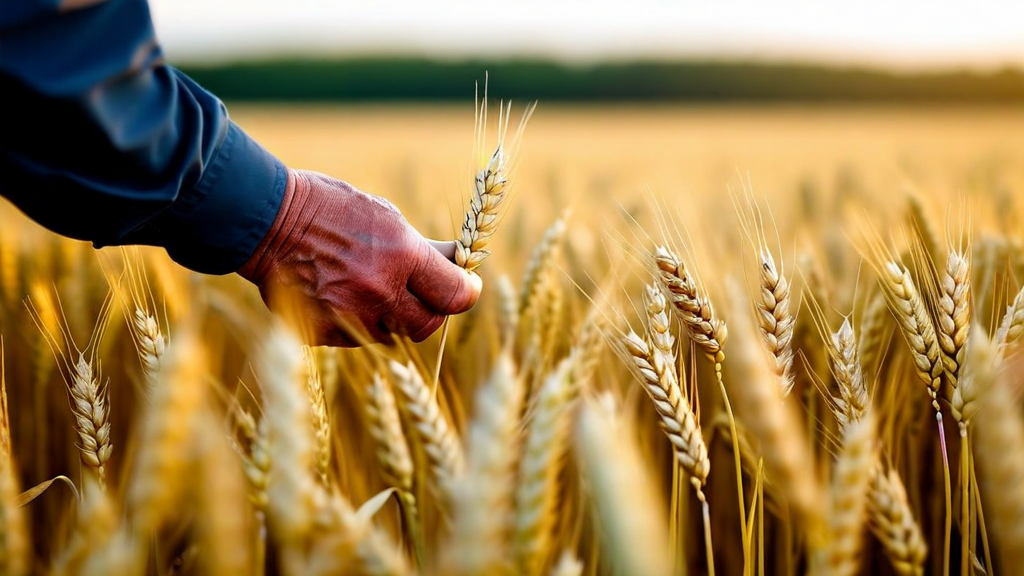
No gene-edited crop variety reaches its potential without field validation. Greenhouse performance and controlled-environment phenotyping are essential early steps â€" they allow researchers to confirm that a genomic edit produces the expected biochemical and physiological changes under defined conditions. But the decisive test of whether an edited variety is worth growing commercially happens in real fields, managed by real farmers, under the stochastic conditions that define actual production: unpredictable rainfall, variable soil types, pest pressure, microclimate variability, and the agronomic practices of the specific farming systems where the variety will be used.
ClimateCrop's field trial program is structured around this reality. We operate a network of trial sites across multiple climate zones, managed in partnership with growers, cooperative extension programs, and international research institutions. This article describes how we structure those partnerships, what we learn from them, and how farmer input shapes the product development process from early-stage candidate selection through to commercial variety recommendations.
Why Farmers Are Research Partners, Not Just Trial Hosts
The traditional model of agricultural variety testing placed farmers in a passive role: they provided land, and researchers managed experiments according to protocols designed entirely in the laboratory. This model persists in many programs. Its weakness is that it optimizes for research control at the expense of ecological validity. A trial managed by scientists using research-grade inputs, intensive monitoring, and controlled irrigation tells you how a variety performs under optimal management â€" information that is useful but incomplete for predicting performance under the actual management conditions of commercial farming.
Farmers bring irreplaceable knowledge of their specific growing environments. An experienced wheat grower in western Kansas understands the interaction between his soil types, typical precipitation patterns, and planting date windows in ways that are not captured in any database. A smallholder sorghum farmer in the Sahel has learned, through decades of observation, which fields drain fastest, which soil textures retain moisture longest, and how heat waves correlate with the calendar of his local planting system. This knowledge is agronomically significant and cannot be acquired by remote sensing or modeled accurately from external datasets.
When farmers participate as active research partners â€" contributing their field knowledge to trial design, observing their own plots throughout the season, and providing qualitative assessments of variety behavior â€" the resulting data is richer and more representative than data generated under exclusively researcher-controlled conditions. Farmer observations often surface performance characteristics that standard yield and biomass measurements miss: differences in lodging behavior during wind events, variation in harvestability at the end of the season, unexpected interactions between an edited variety and locally prevalent fungal pathogens, or simply practical observations about how a variety handles the equipment and practices typical of the region.
Structure of ClimateCrop's Field Trial Network
The trial network currently spans seven primary locations across four continents, selected to represent the principal climate zones and farming system types relevant to our programs. In the United States, we maintain sites in the Texas High Plains (dryland winter wheat under terminal drought), the Pacific Northwest (irrigated wheat with heat stress during grain fill), and central Iowa (rainfed maize under variable summer drought). Internationally, we work through established partnerships in Morocco (dryland wheat in Mediterranean climate), India (wheat in the Indo-Gangetic Plain heat and drought belt), Zimbabwe (smallholder maize in southern African semi-arid systems), and Australia (dryland wheat in the Western Australian wheat belt).
Each location is managed through a formal partnership agreement with a host institution â€" typically a university, agricultural research station, or cooperative â€" and involves between three and eight individual farm sites within the location. The use of multiple farm sites within each location provides the within-location replication needed to separate genuine variety effects from site-specific noise, and gives partner farmers direct exposure to the full set of candidate varieties being evaluated.
Trial Design Principles
Trials are designed using alpha-lattice or augmented incomplete block designs that control for within-field spatial variation while maintaining the statistical power to detect agronomically meaningful differences between candidates. Standard plot sizes are 1.5 meters by 8 meters for small grains, with border rows to eliminate interplot competition effects. In farmer-managed trials, we scale up to minimum plot sizes that allow farmers to harvest with their own equipment â€" typically 0.1 to 0.5 hectares per plot â€" which introduces greater variability but provides more realistic management conditions and farmer engagement.
Each trial includes at minimum two locally adapted commercial checks â€" varieties familiar to participating farmers and representative of current best practice in the region â€" as well as the ClimateCrop candidate events under evaluation. Comparisons are always made to the most relevant locally adapted varieties, not to laboratory controls or older standards. This design provides the information most useful to farmers and regulators: how does this edited variety perform relative to what farmers are currently planting?
Data Collection and the Role of Farmer Observation
Quantitative data collection follows standard protocols across all locations: emergence counts, midseason biomass estimates, yield measurements at harvest, grain quality sampling (protein, moisture, test weight for grains), and standard phenological scores (days to heading, days to maturity). Remote sensing data from UAV flights at key growth stages supplements ground measurements and allows high-resolution spatial analysis of within-trial variation.
Alongside these quantitative measurements, we conduct structured farmer assessments at three points during the trial season. The first assessment occurs at establishment, where cooperating farmers examine seedling vigor and early canopy development and compare their observations to the trial's check varieties. The second occurs at midseason â€" around heading for small grains, or V12 for maize â€" when stress response differences between varieties are most visible to trained observers. The third is a post-harvest interview covering overall impressions, any unexpected observations, and the farmer's assessment of which varieties they would be interested in planting commercially if the option were available.
These structured assessments are not simply feedback collection. They are documented data and form part of the trial record. Patterns in farmer observations across locations frequently identify performance dimensions not captured by the quantitative measurements. In one wheat trial cohort, participating farmers in three separate locations independently flagged that one candidate variety had noticeably better straw quality at harvest â€" it stood more uniformly and was less prone to lodging during the windy post-anthesis period typical of all three sites. This observation was confirmed by retrospective analysis of UAV canopy height data and ultimately influenced how we characterized the variety's commercial attributes.
Managing Expectations and Communicating Uncertainty
Field trials produce performance estimates with uncertainty attached. A variety that averages 12 percent yield advantage over the best check across twelve trial sites has not proven that it will outperform by 12 percent on every farm in the target geography. Soil types, management practices, drought timing, and other local factors will produce a distribution of outcomes across the full commercial deployment area. Communicating this clearly to farmer partners â€" and providing them with honest assessments of where and under what conditions a variety is most likely to perform well â€" is essential to maintaining the trust on which productive long-term partnerships depend.
We present trial results to participating farmers in annual field days at each location, where we walk through data from the current season, discuss observed performance characteristics, and explicitly describe what we do and do not yet know about the variety. Farmers whose plots underperformed expectations receive as much attention as those where performance was strong â€" understanding the sources of underperformance is often more scientifically valuable than confirming strong performance in favorable conditions.
From Trial Data to Variety Recommendations
Variety recommendations â€" both the internal decisions about which candidates progress to the next development stage and the external guidance we provide to commercial partners and licensing organizations â€" are grounded in multi-environment analysis of trial data pooled across locations and years. Meta-analysis across environments uses stability statistics that identify varieties with consistently strong performance across diverse environments versus those that perform well only under specific conditions.
For climate-adapted varieties, stability across drought conditions of different timing and severity is especially important. A drought tolerance trait that performs strongly only when drought occurs during vegetative growth provides less value than one that maintains yield advantage across drought events at vegetative, anthesis, and grain-filling stages. Multi-environment trials that span multiple seasons inevitably capture this variation â€" no two growing seasons produce identical drought timing â€" and the resulting dataset allows stability analysis that would be impossible from a single season of testing.
Farmer input from the structured assessments described above is formally incorporated into the variety advancement decision process. Candidates that score consistently low in farmer agronomic assessments â€" for lodging susceptibility, harvestability, or other management-relevant traits â€" face a higher bar for advancement even when their yield data is favorable, because varieties that create management problems are unlikely to achieve the adoption rates needed to demonstrate climate impact at scale.
Building Long-Term Relationships with the Agricultural Community
The most productive farmer partnerships in our network have been in place for multiple seasons. Continuity matters. A farmer who has hosted two or three trial seasons has a trained eye for variety differences, a calibrated sense of how our candidate varieties behave in their specific environment, and a relationship of trust with our field staff that makes their observations more candid and more useful than those of first-year collaborators.
We invest in this continuity through consistent field staff assignments, transparent data sharing (participating farmers receive complete data from their own sites each year), and fair compensation for the time and field resources they contribute. Long-term farmer partners are also the most credible early adopters when varieties complete development and move toward commercial release â€" their willingness to plant at commercial scale and share their experience publicly with neighboring farmers is a significant asset during the critical early phase of market entry.
The communities in which we work are facing real agricultural challenges driven by climate change. Our field trial program is not simply a technical exercise. It is also a commitment to being present in those communities, listening to what farmers observe, and developing products that address the problems they actually face rather than problems abstracted from real agricultural conditions. That grounding in farmer reality is what distinguishes effective agricultural innovation from laboratory science that never reaches the field.